 FlaskConnect™
Home › Apparatus gallery › Suction filtration
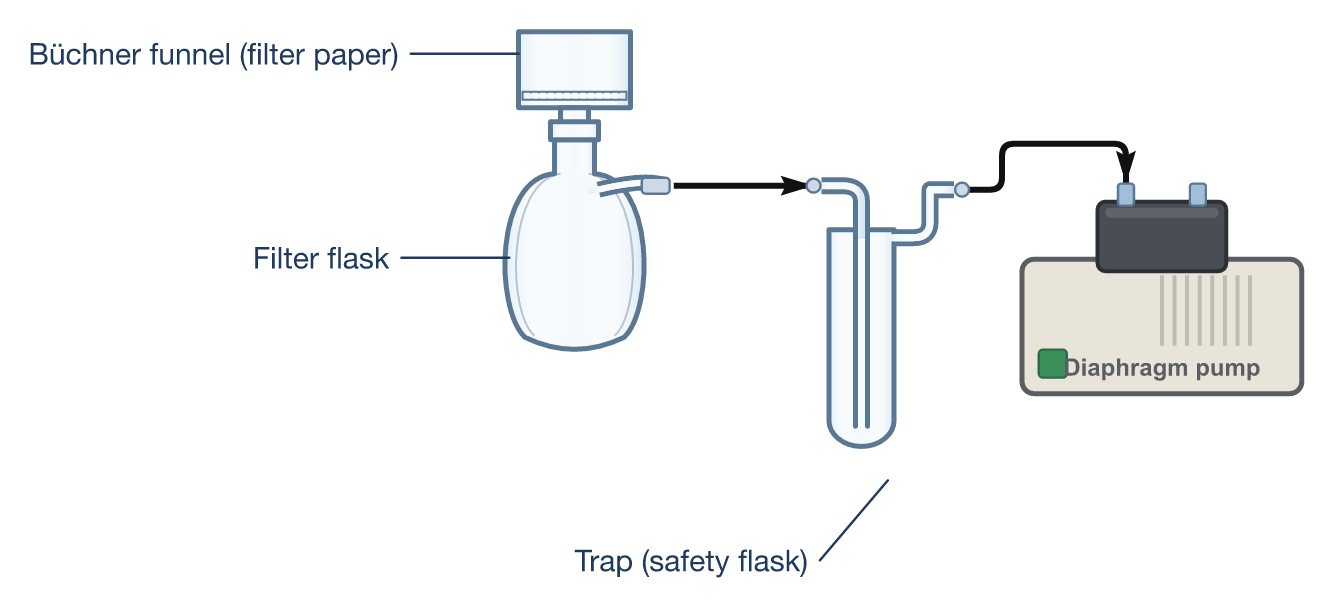
Suction (Vacuum) Filtration Diagram (Büchner Funnel, Filter Flask, Trap)
Suction filtration separates a solid from a liquid quickly. Use it to collect crystals or precipitates and to remove drying agents and other solids.
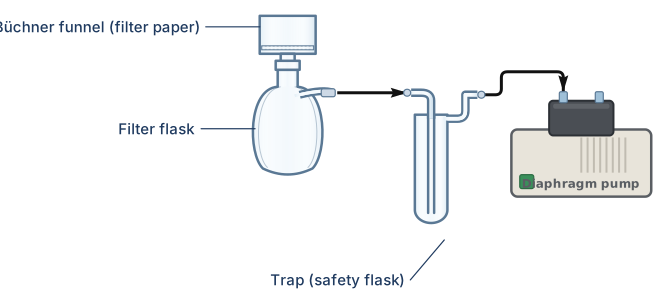
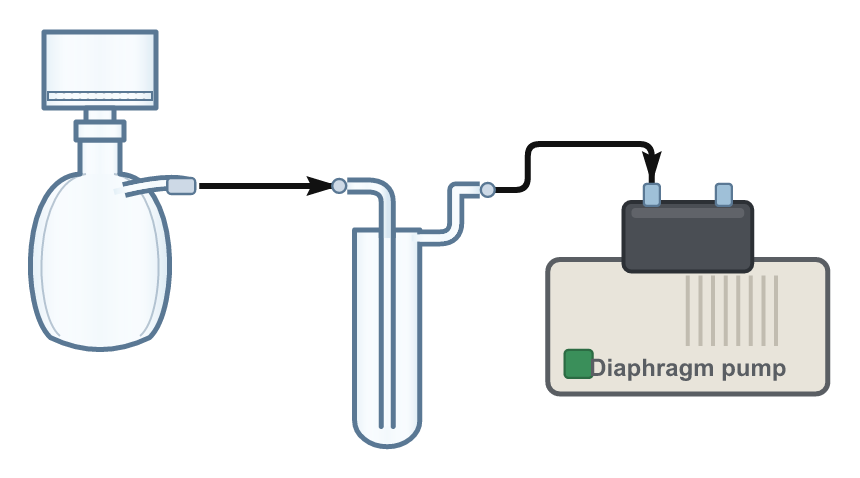
Free to use without attribution in lab reports, theses, teaching materials, slides, supporting information and on the web, including modified and commercial use. Released under CC0 1.0 (public domain dedication). A mention of “made with FlaskConnect” is appreciated but not required.
Equipment
- Büchner funnel and filter paper
- Heavy-walled filter flask
- Rubber adapter
- Trap (safety flask)
- Vacuum pump (or aspirator)
Setup tips
- Use filter paper that covers all the holes without climbing the wall. Wet it with the solvent and pull it flat under vacuum before pouring.
- Put a trap between the filter flask and the pump so the filtrate cannot reach the pump, and aspirator water cannot flow back into the filtrate.
- To stop, first let air into the filter flask (disconnect the hose or open a tap), then turn off the pump or aspirator, to prevent suck-back.
- Use a heavy-walled filter flask rated for vacuum, and never a cracked one.
- To wash the crystals, release the vacuum, add a little cold solvent, then pull the vacuum again.
Common mistakes
- Turning off the pump or aspirator while still under vacuum (suck-back).
- Filter paper lifting so solid passes into the filtrate.
- Pulling a vacuum on a thin-walled Erlenmeyer flask.
Always follow your institution's safety rules and your supervisor's instructions.
Draw this in the app
This diagram was drawn in FlaskConnect. Pick the glassware and it connects itself, coolant lines and all, in a few minutes. Apparatus drawing and export (SVG, PNG, PowerPoint, Word, Excel) are free.