 FlaskConnect™
Home › Apparatus gallery › Schlenk line
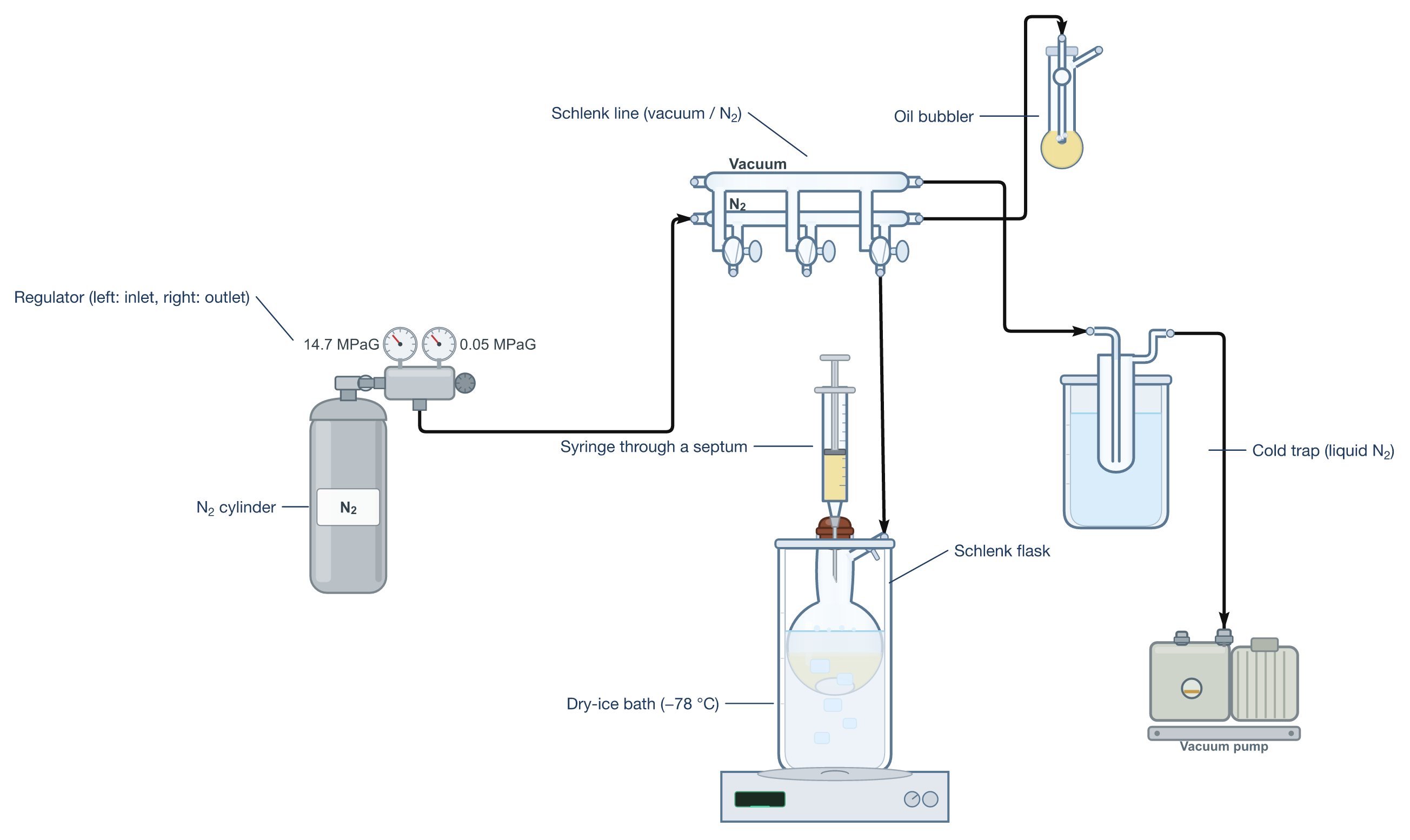
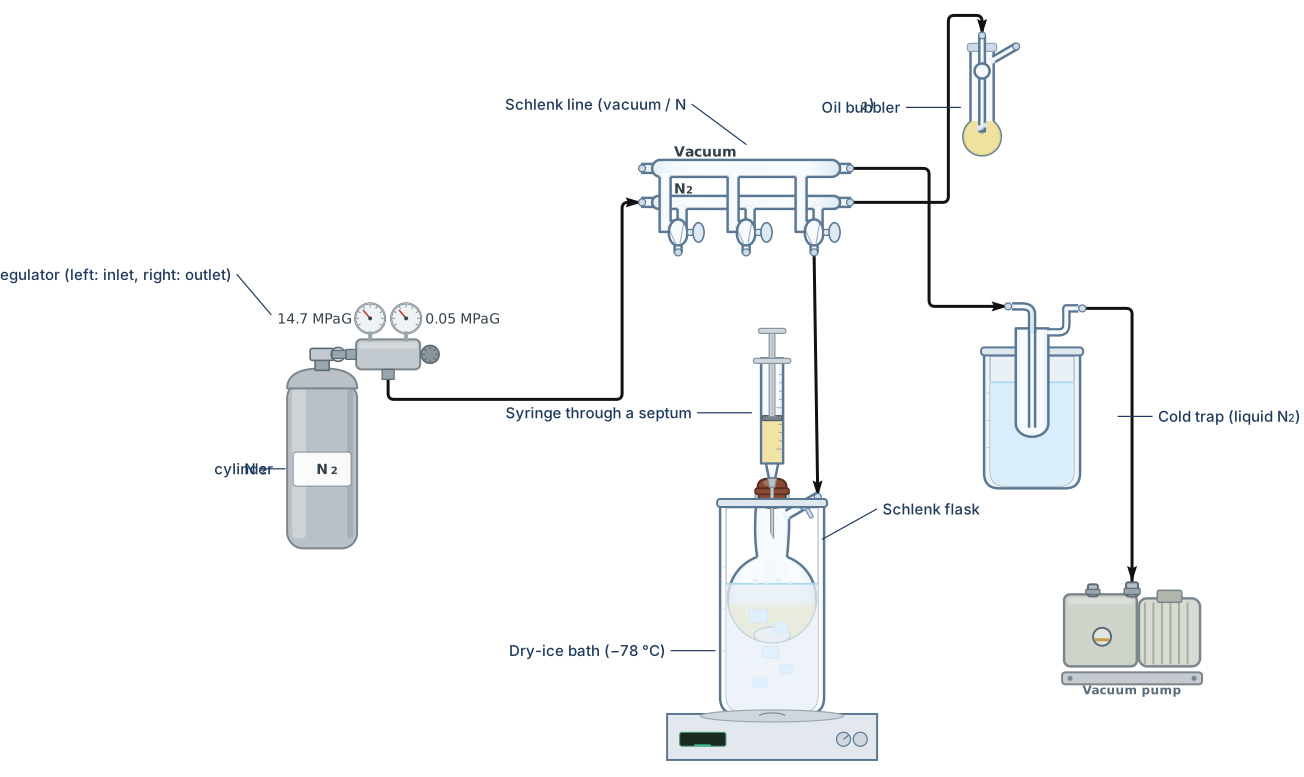
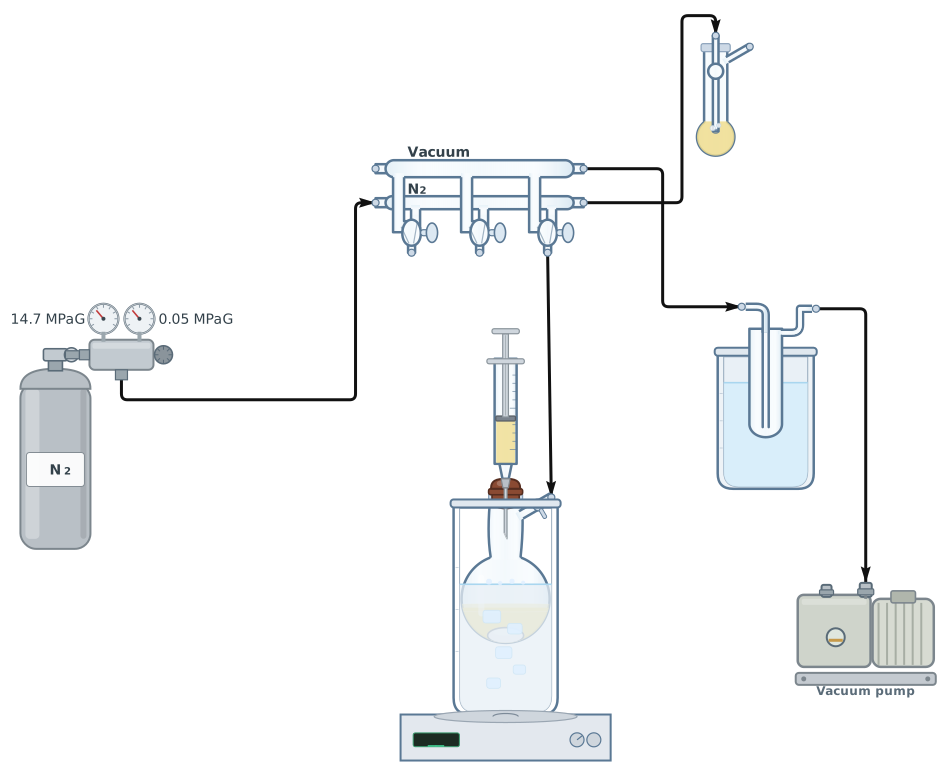
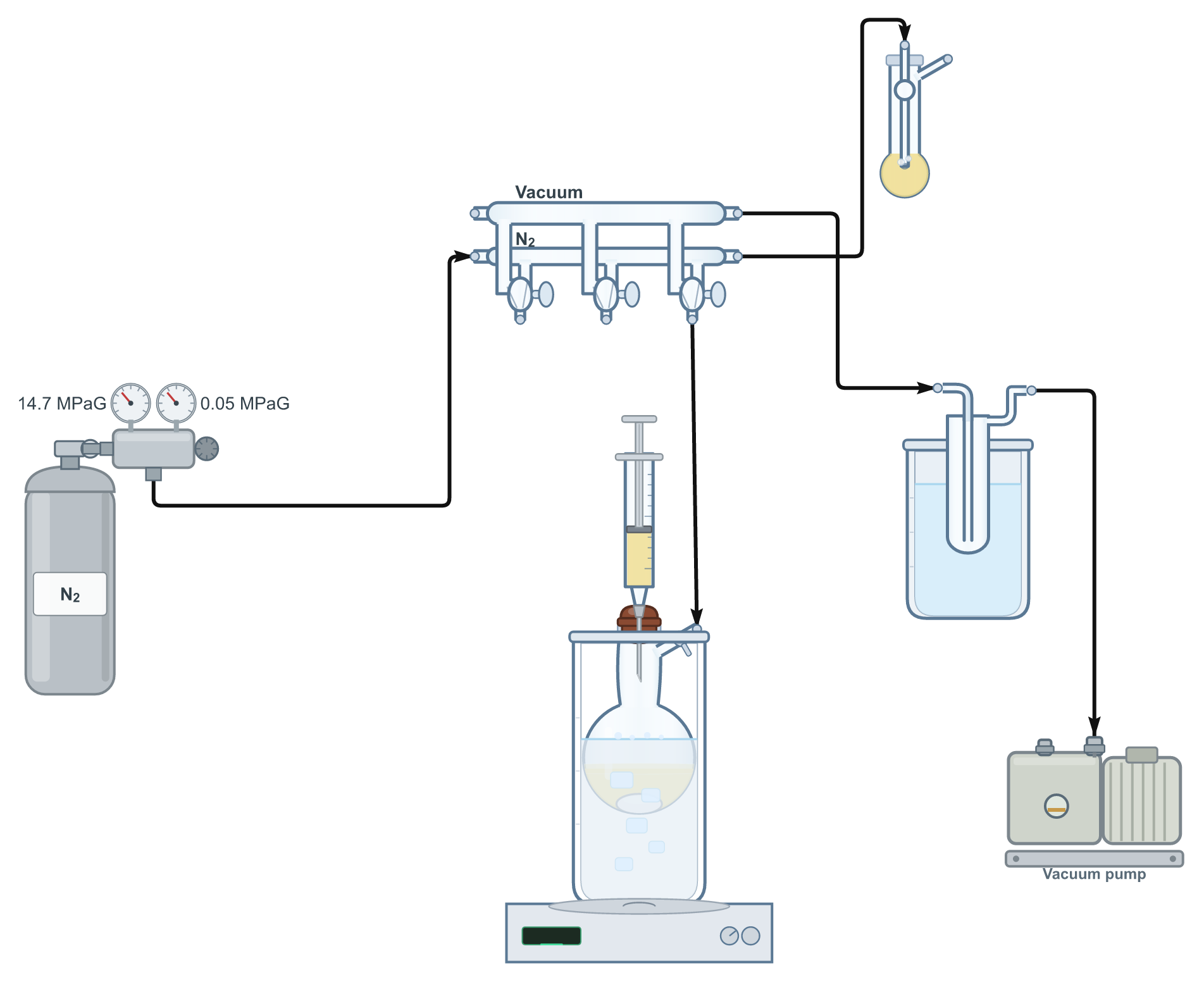
Schlenk Line Diagram (Vacuum/Inert Gas, Bubbler, Cold Trap, Labeled)
A Schlenk line handles air- and moisture-sensitive reagents. Taps switch each port between a vacuum manifold and an inert-gas (nitrogen or argon) manifold, so the inside of a flask can be replaced with inert gas.
Free to use without attribution in lab reports, theses, teaching materials, slides, supporting information and on the web, including modified and commercial use. Released under CC0 1.0 (public domain dedication). A mention of “made with FlaskConnect” is appreciated but not required.
Equipment
- Schlenk line (dual vacuum / inert-gas manifold)
- Nitrogen cylinder and regulator
- Oil bubbler
- Cold trap (liquid nitrogen)
- Vacuum pump
- Schlenk flask
- Septum and syringe
- Dry-ice bath (−78 °C) and magnetic stirrer
Setup tips
- Replace the air in a flask by evacuating and back-filling with inert gas about three times.
- Connect an oil bubbler to the inert-gas outlet to see the flow, and to stop air from flowing back in.
- Keep the regulator outlet pressure low (around 0.05 MPa gauge). The actual line pressure is set by the depth of oil in the bubbler; too high a supply can pop joints and septa if the line is blocked.
- Cool the cold trap with liquid nitrogen only after the system is under vacuum. Cooling it while open to air condenses liquid oxygen, which can explode with organic material.
- To shut down, remove the liquid-nitrogen dewar from the trap before letting the system back to atmospheric pressure (never admit air to a cold trap).
- Add reagents by syringe through a septum under a flow of inert gas.
Common mistakes
- Cooling the trap with liquid nitrogen while it is open to air (liquid oxygen).
- Running inert gas without a bubbler (pressure builds; air flows back).
- Setting the regulator outlet pressure too high.
- Doing only one evacuate–refill cycle.
Always follow your institution's safety rules and your supervisor's instructions.
Watch it built
Building this setup in FlaskConnect (with narration).
Draw this in the app
This diagram was drawn in FlaskConnect. Pick the glassware and it connects itself, coolant lines and all, in a few minutes. Apparatus drawing and export (SVG, PNG, PowerPoint, Word, Excel) are free.