 FlaskConnect™
Home › Apparatus gallery › Addition and Grignard setup
Grignard Reaction Apparatus Diagram (Addition Funnel, Drying Tube, Ice Bath)
This setup is for moisture-sensitive reactions such as the Grignard reaction, where a reagent is added slowly while the temperature is watched. Addition, reflux and internal temperature are handled at once.
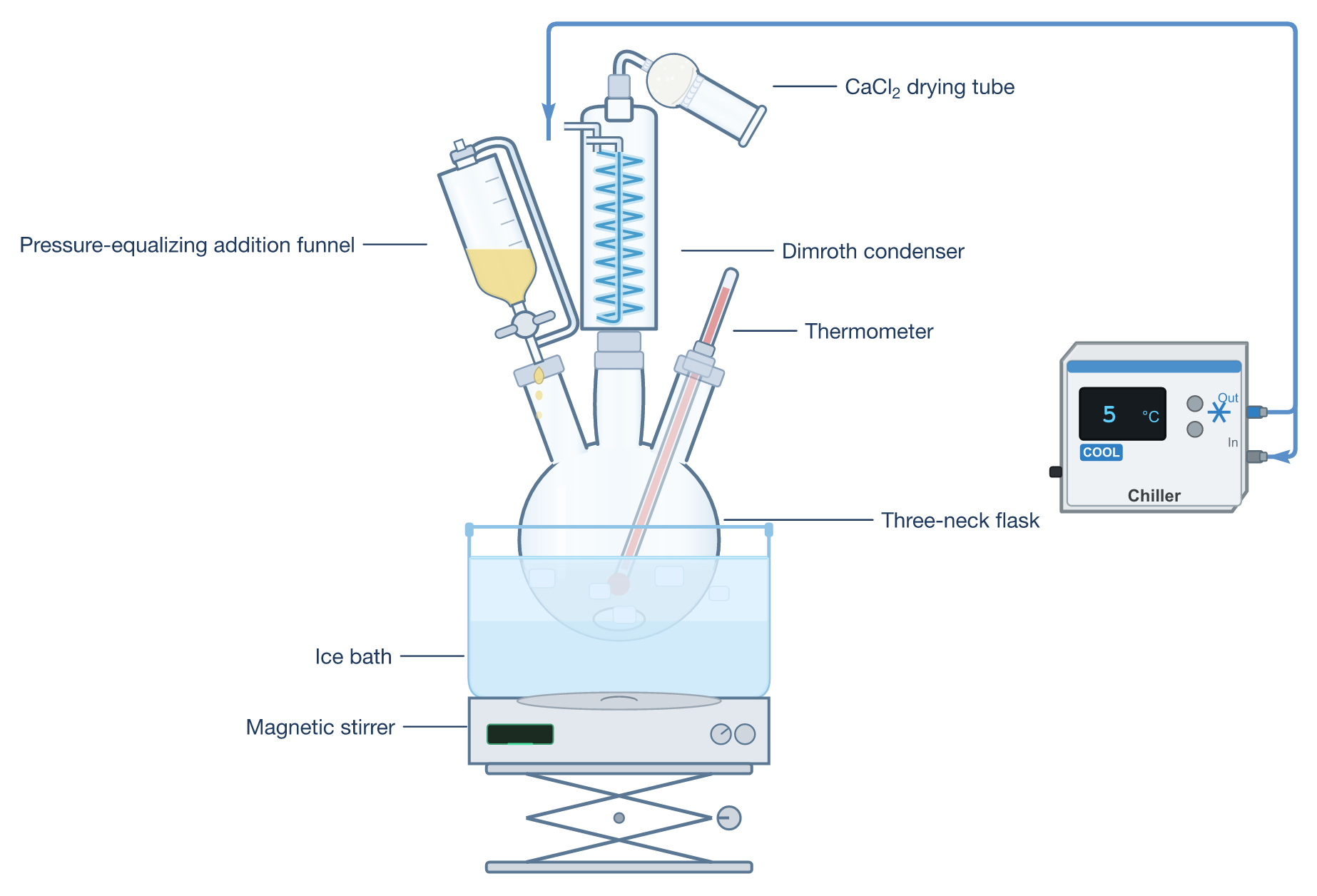
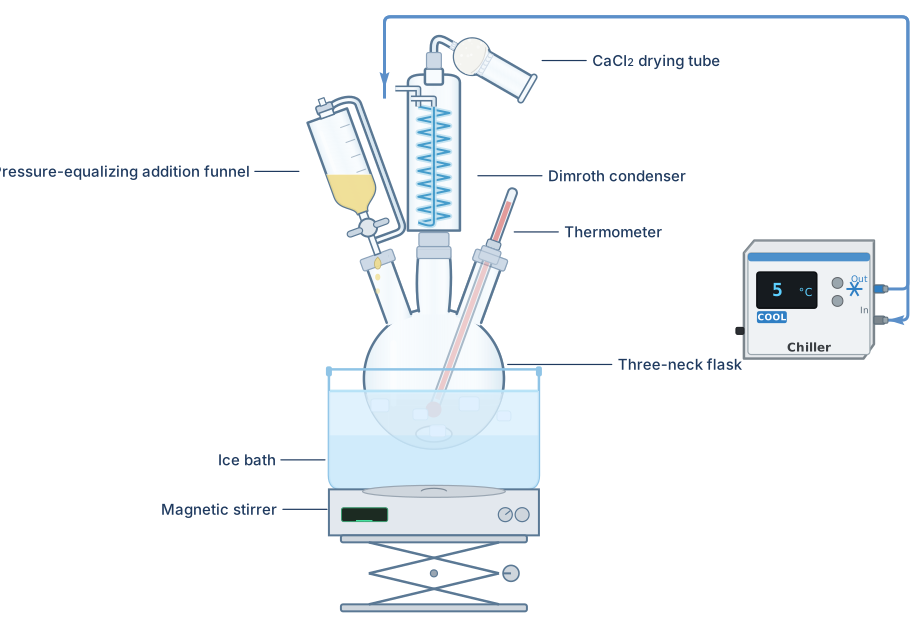
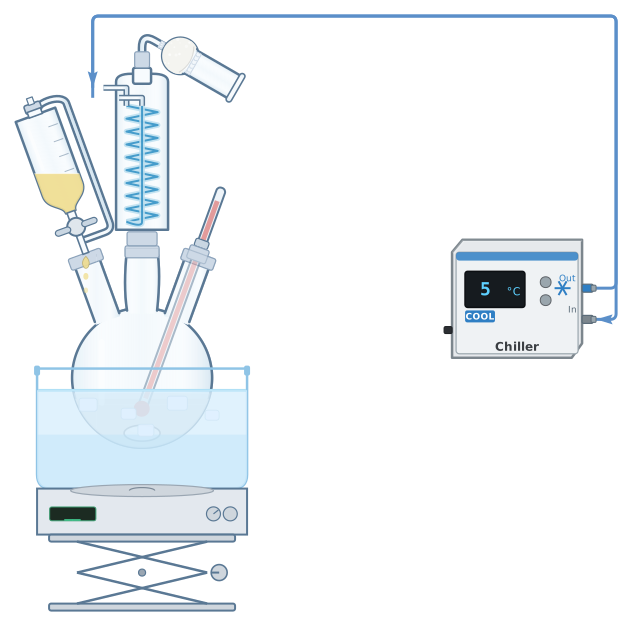
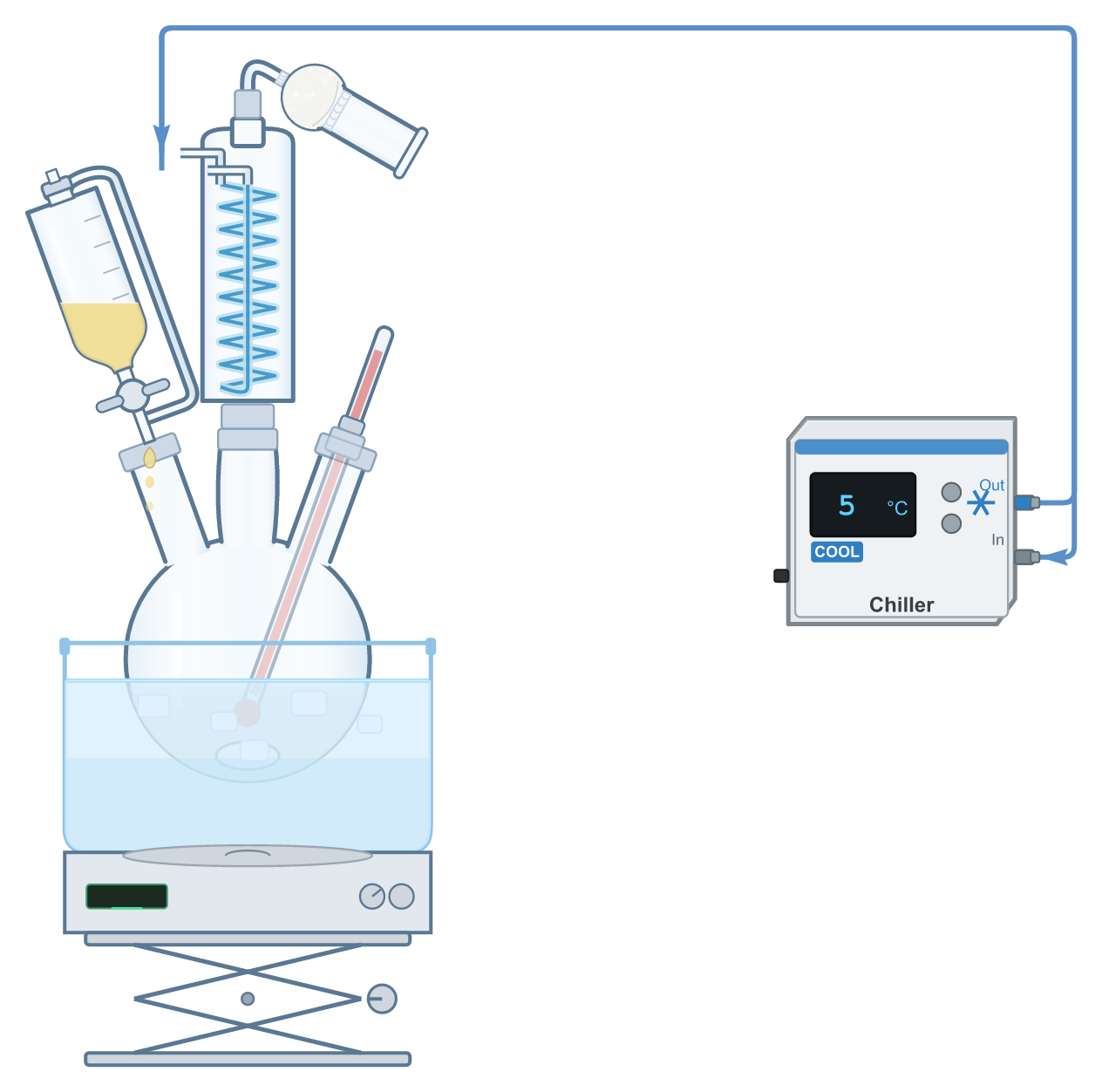
Free to use without attribution in lab reports, theses, teaching materials, slides, supporting information and on the web, including modified and commercial use. Released under CC0 1.0 (public domain dedication). A mention of “made with FlaskConnect” is appreciated but not required.
Equipment
- Three-neck flask
- Dimroth condenser with a CaCl₂ drying tube
- Pressure-equalizing addition funnel
- Thermometer
- Ice bath (or heating bath)
- Magnetic stirrer and stir bar
- Coolant
Setup tips
- Dry the glassware thoroughly before use (oven-dry and cool it away from moisture) and use anhydrous solvent.
- Fit a calcium chloride drying tube (or an inert-gas line) on the condenser to keep out moisture. Do not seal the system.
- Use a pressure-equalizing addition funnel: the pressure above and below stays balanced, so addition does not stall in a closed system.
- During exothermic stages, control the temperature by the addition rate and check it with the thermometer. Keep an ice bath ready.
- Stir so each portion of reagent mixes in at once.
Common mistakes
- Glassware or solvent not dry enough, so the reagent fails to form or decomposes.
- Adding too fast, causing a sudden exotherm.
- Stoppering the top of the condenser (a sealed system).
Always follow your institution's safety rules and your supervisor's instructions.
Watch it built
Building this setup in FlaskConnect (with narration).
Draw this in the app
This diagram was drawn in FlaskConnect. Pick the glassware and it connects itself, coolant lines and all, in a few minutes. Apparatus drawing and export (SVG, PNG, PowerPoint, Word, Excel) are free.