 FlaskConnect™
Home › Apparatus gallery › Soxhlet extraction
Soxhlet Extractor Diagram (Labeled, How It Works, Free SVG/PNG)
A Soxhlet extractor repeatedly extracts a sparingly soluble compound from a solid with a small amount of solvent. It is used, for example, to determine the fat content of foods and to extract natural products from plant material.
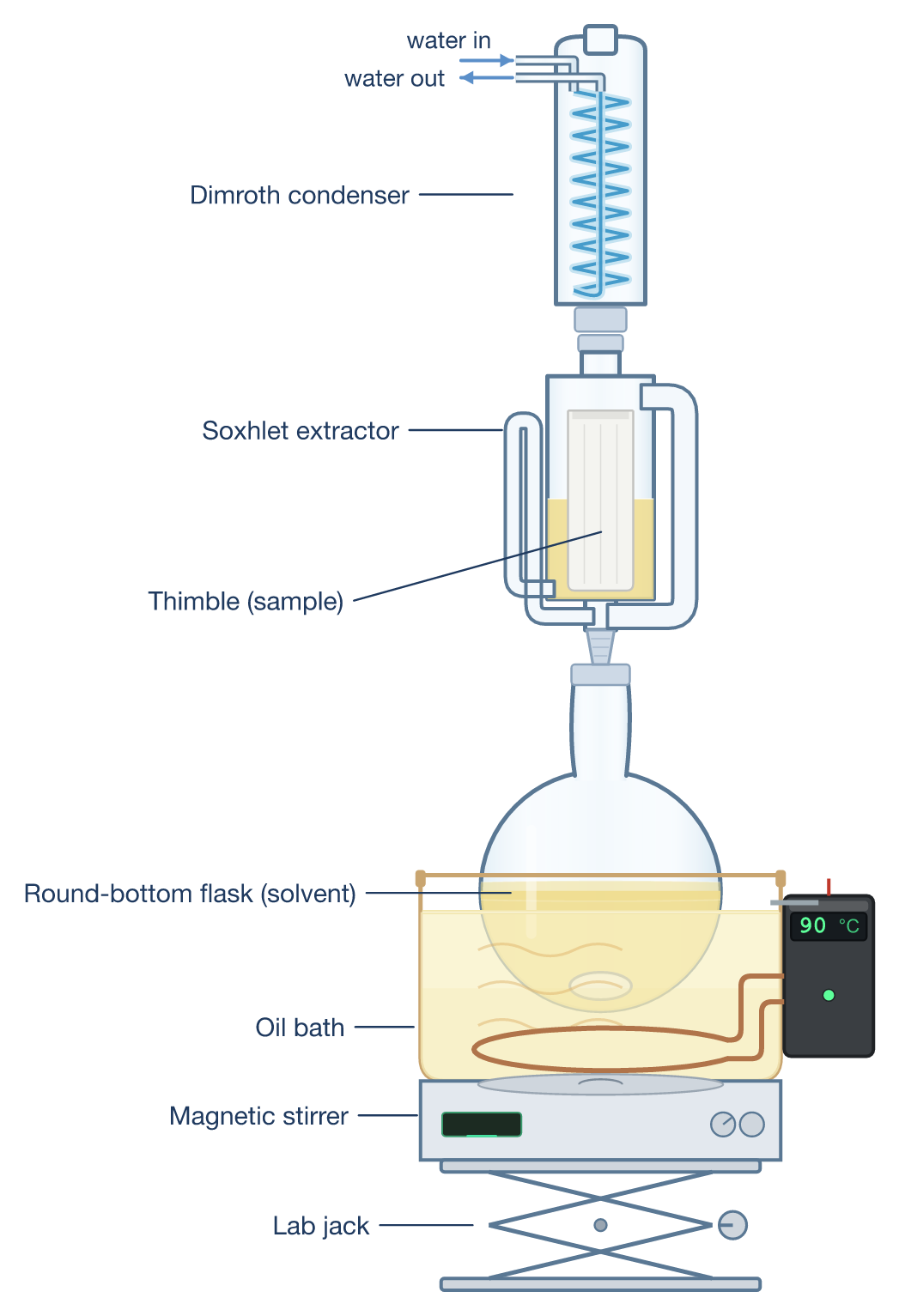
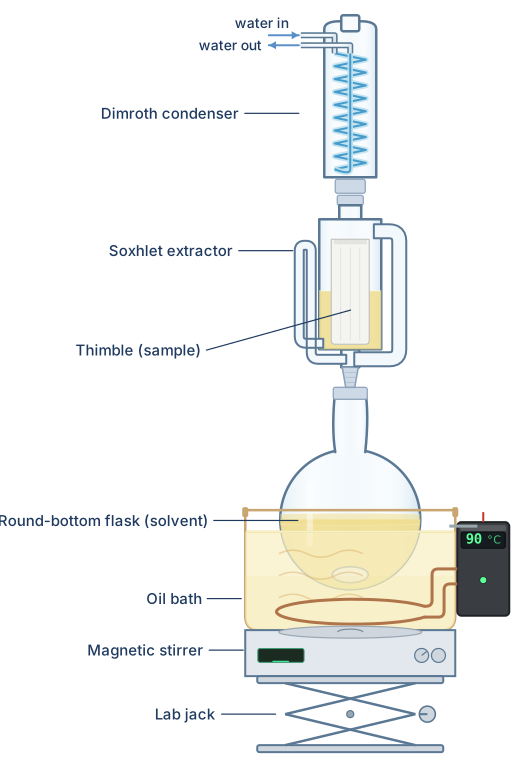
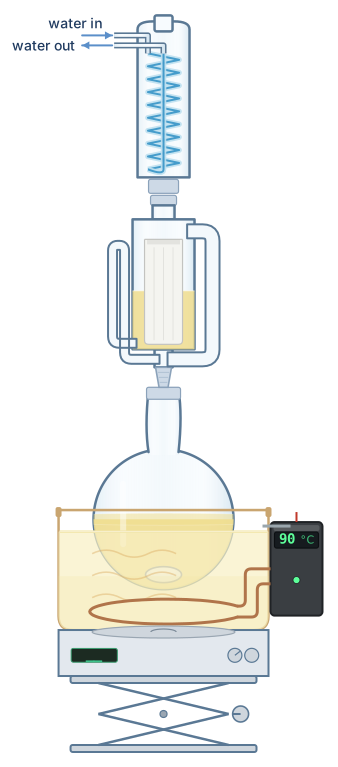
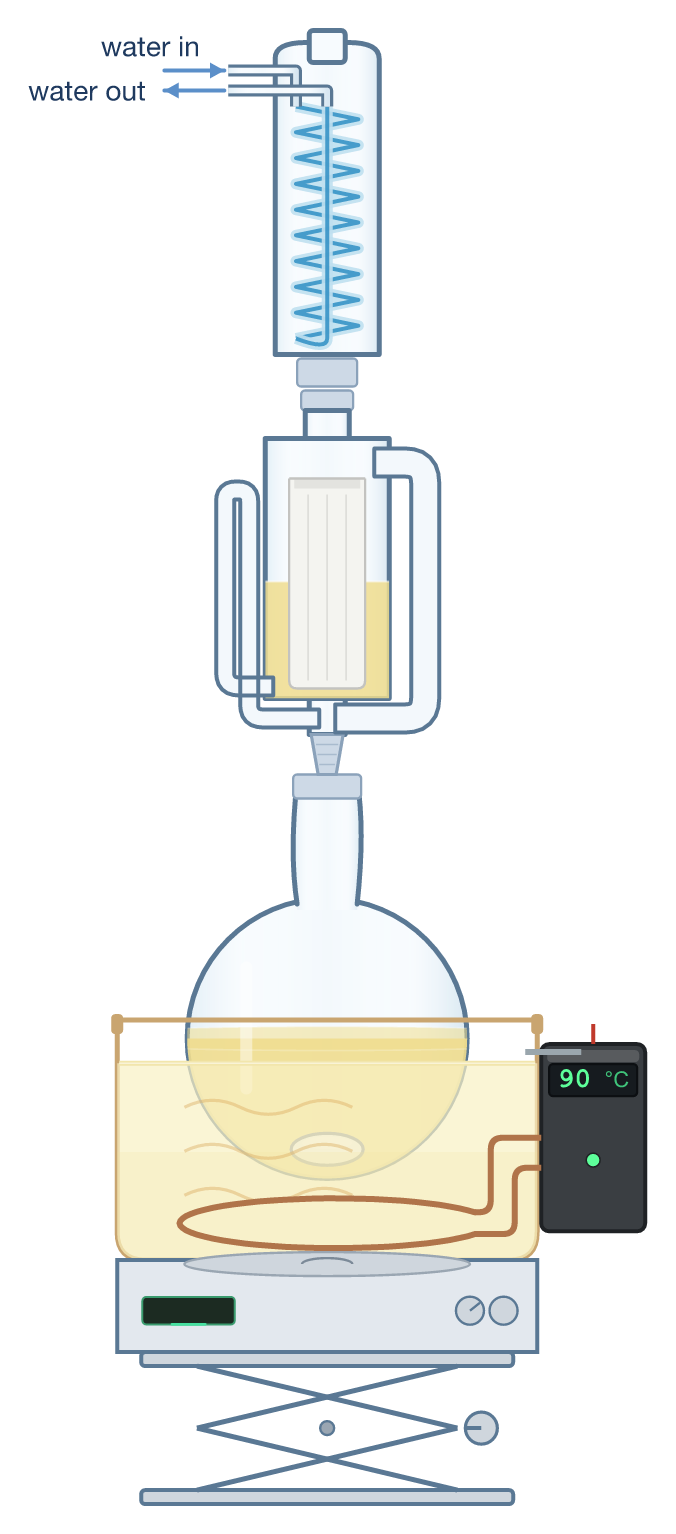
.chemc is a FlaskConnect drawing file. Open it in the free FlaskConnect app to change the glassware, labels and layout before exporting (double-click it on Mac or Windows; on iPad, open it from the Files app and choose FlaskConnect).
Free to use without attribution in lab reports, theses, teaching materials, slides, supporting information and on the web, including modified and commercial use. Released under CC0 1.0 (public domain dedication).
How a Soxhlet extractor works
Solvent boiling in the flask rises as vapor through the wide side arm of the extractor into the condenser, condenses, and drips onto the sample in the thimble. The extractor slowly fills with solvent; when the liquid reaches the top of the siphon tube, it all drains back into the flask at once, carrying the extracted compound with it.
The cycle repeats on its own, so the sample is always washed with freshly distilled solvent while the extracted compound builds up in the flask. Because the compound is much less volatile than the solvent, only the solvent evaporates and the compound becomes concentrated in the flask.
Equipment
- Round-bottom flask (solvent)
- Soxhlet extractor
- Thimble (holds the sample)
- Dimroth condenser
- Oil bath (or heating mantle), magnetic stirrer and stir bar
- Coolant
Setup tips
- Put the sample in the thimble and cover it with a small plug of glass wool or cotton so it does not float.
- Keep the top of the sample below the highest point of the siphon tube, so the whole sample is covered by solvent in every cycle.
- Put more solvent in the flask than the extractor holds, so the flask does not run dry while the extractor is filling.
- Leave the top of the condenser open to the air (never heat a sealed system), and prevent bumping with a stir bar or boiling chips.
- Start the coolant before heating, and adjust the heat so the solvent refluxes gently and the siphon keeps cycling.
Common mistakes
- Packing the sample above the top of the siphon tube (the top part is never extracted).
- Too little solvent in the flask, so it runs dry when the extractor fills.
- Stoppering the top of the condenser while heating (a sealed system).
- Heating so hard that vapor reaches the top of the condenser.
FAQ
- What is a Soxhlet extractor used for?
- To extract a compound that is only sparingly soluble from a solid. Classic examples are determining the fat content of foods and extracting natural products from plant material.
- How does the siphon work?
- When the liquid in the extractor rises above the highest point of the siphon tube, the tube fills and the whole chamber drains into the flask. The chamber then starts filling again, and the cycle repeats.
- How is it different from extraction with a separatory funnel?
- A separatory funnel moves a compound between two immiscible liquids. A Soxhlet extractor pulls a compound out of a solid sample by circulating the solvent through it many times.
- How long does a Soxhlet extraction take?
- Often several hours or more, during which the siphon cycles many times. The time depends on how soluble the compound is and how much sample there is.
- Can I use this diagram in my lab report?
- Yes. It is released under CC0, so you can use and modify it without attribution. Open the .chemc file in FlaskConnect to change the glassware or labels before exporting.
Always follow your institution's safety rules and your supervisor's instructions.
Draw this in the app
This diagram was drawn in FlaskConnect. Pick the glassware and it connects itself, coolant lines and all, in a few minutes. Apparatus drawing and export (SVG, PNG, PowerPoint, Word, Excel) are free.